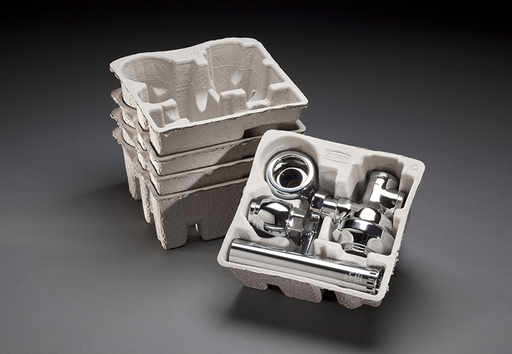
pulp molding is a kind of environmentally friendly packaging molding technology with natural plant fibers (such as bagasse, waste pulp) as raw materials.Because of its
good buffering, degradability and high plasticity, it is widely used in
electronic products, alcohol, cosmetics and food packaging and other fields.With the global emphasis on sustainable development, more and more enterprises choose customized pulp molding packaging to replace traditional foam plastics.
?
?
What is the Process for Customizing Pulp Molding?
Demand communication: The customer provides product parameters and packaging requirements, and the supplier determines the dry pressing/wet pressing process (dry pressing is suitable for large and heavy items, while wet pressing is suitable for light and small precision products).
?
3D modeling: Designers create 3D models based on requirements, optimize the structure to ensure buffering performance, and simulate drop and pressure scenarios.
?
Mold development: Make molding and finalizing mold, mostly made of cast aluminum or stainless steel, cycle of 7-15 days.
?
Sample testing: Make samples for customers to install, drop and conduct other tests to verify functionality.
?
Mass production: After confirming the sample, mass production is carried out, going through processes such as forming, hot pressing and shaping, and edge cutting.
?
Quality inspection and shipment: Full inspection or random inspection of products. After passing, logistics will be arranged for shipment according to customer requirements.
?
Pulp packaging surface treatment processes improve aesthetics, functionality and durability.
?
Printing process
- Screen printing: Thick ink layer, bright color, suitable for structural changes in more products, such as concave and convex surface printing.
?
- Inkjet printing: Non-contact plateless imaging, controlled by a microprocessor, can print clear graphics and text on concave and convex surfaces.
?
- Pad printing: Use silicone rubber head transfer printing, suitable for irregular surface multi-color fine printing, such as electronic products, special-shaped packaging.
?
Coating treatment
- New technology of plastic oil: Replace traditional film coating, bio-based materials are environmentally friendly and improve surface properties.
?
- Fluorine-free oil-proof and water-proof coating:?Such as bio-based or nano-coating, in accordance with the EU fluorine ban, used in food contact scenarios.
?
- Functional coating: Waterproof, oil-proof, anti-static, etc., such as surface spraying to improve hair loss, poor smoothness.
?
Embossing and hot stamping
- Embossing: By mechanical force, concave and convex characters or patterns are formed to enhance the three-dimensional effect.
?
- Hot stamping: Hot stamping with gold, silver and other metal foils to enhance the aesthetic appeal and added value, suitable for high-end packaging.
?
Physical and Chemical processing
- Physical methods: Grinding, polishing, calendering, etc. change the surface shape and improve the flatness.
?
- Chemical method: Acid-base treatment, oxidation reduction and other changes in fiber surface chemical properties, improve printing adaptability.
?
- Biotechnology: Enzyme treatment or microbial degradation to reduce pollution and achieve surface modification.
?
?
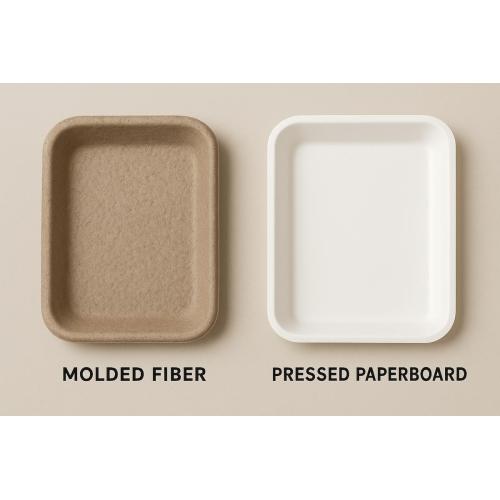
What are the Differences Between Wet Pressing and Dry Pressing of Pulp Packaging?
?
?
Why is Pulp Packaging Worth Paying Attention to?
Pulp packaging is not only a compliance choice to deal with the plastic prohibition policy, but also an important means for enterprises to realize green transformation and enhance consumer goodwill. Its advantages are reflected in:
?
- Environmentally friendly: Made from recycled paper or sustainable forest resources, it can be naturally degraded or recycled after use, in line with the principles of a circular economy.
?
- Controllable cost: Compared with materials such as foamed polystyrene (EPS) and vacuum formed PET, it has more price advantages in many application scenarios.
?
- Flexible design: Through parametric design and mold customization, it can precisely match the geometric shape of the packaged items, providing excellent buffering, impact resistance and anti-corrosion protection effects.
?
- Brand empowerment: More and more consumers pay attention to environmental issues, and the use of pulp packaging helps to enhance brand image and social responsibility awareness.
?
In addition, the application of new technologies such as the patent for "edge trimming mechanism" is also enhancing the efficiency of pulp molding processing, reducing waste, and promoting the intelligent upgrade of the industry.
?
Pulp packaging is a kind of environmentally friendly packaging based on plant fiber, made by molding or molding process, especially represented by pulp molding products, with good buffering, plasticity and ecological sustainability.It is rapidly replacing the traditional plastic packaging, widely used in food and beverage, cosmetics, electronic products, e-commerce logistics and other fields, is an important direction of the current green packaging transformation.




 Guangdong Shiteng Wisdom Technology Co., Ltd.